

Almost everyone who drives to Ruaha National Park passes through Iringa. This page is the practical information we wish we had been given: how long the drive really takes, what the road is like, whether you need a 4×4, and where you can break the journey.
How far is it from Iringa to Ruaha?
TANAPA estimates the drive from Iringa to Ruaha at roughly two to three and a half hours, depending on the road surface and the season. The usual approach is via Tungamalenga. It is not a long distance on paper, but the second half is unsurfaced and you will not be driving at highway speed.
Plan the drive as a half-day, not a quick hop. If you want to be inside the park for the best game-viewing hours, you need to leave very early, which is exactly why so many travellers sleep on this side of Iringa rather than in town.
What is the road like?
The first stretch out of Iringa is straightforward. After that you move onto dirt and gravel, with corrugated sections, sandy patches, and after rain some genuinely muddy stretches.
- Dry season (roughly June to October): firm, dusty, corrugated in places. Slow but not difficult.
- Wet season (roughly November to May): the same road can turn soft and rutted. Allow considerably more time and do not drive it after dark.
Do I need a 4×4?
For the park itself: yes. TANAPA recommends a high-clearance 4×4, and in the rainy season it is not optional. Inside Ruaha you will meet sand, mud, corrugations and wet crossings.
To reach our farm: no. We are 30 minutes from Iringa on the Ruaha road and an ordinary car gets here comfortably, all year round. Plenty of our guests arrive in a saloon car, leave it with us, and continue into the park another way.
Park entry and practicalities
- Park headquarters are at Msembe.
- Entry is charged per 24 hours, per person, with separate vehicle fees. As a planning figure, international adult entry has recently been in the region of US$35 per 24 hours including VAT, but always check the current TANAPA rates before you travel, as they change and are sometimes listed inconsistently.
- Fill your tank in Iringa. Do not count on fuel beyond it.
- Carry drinking water, a spare wheel you have actually checked, and cash.
- Mobile coverage thins out as you go. Download your maps offline before leaving Iringa.
When to go
June to October is the classic window. The land dries out, the animals concentrate along the Great Ruaha River, and the roads are at their best. Ruaha is known for large elephant populations and for lion, and the dry months make them far easier to find.
The green season has its own case: fewer vehicles, dramatic skies, migrant birds, and everything looking alive. Just budget more driving time and expect the wildlife to be more spread out.
Breaking the journey at Mangalali
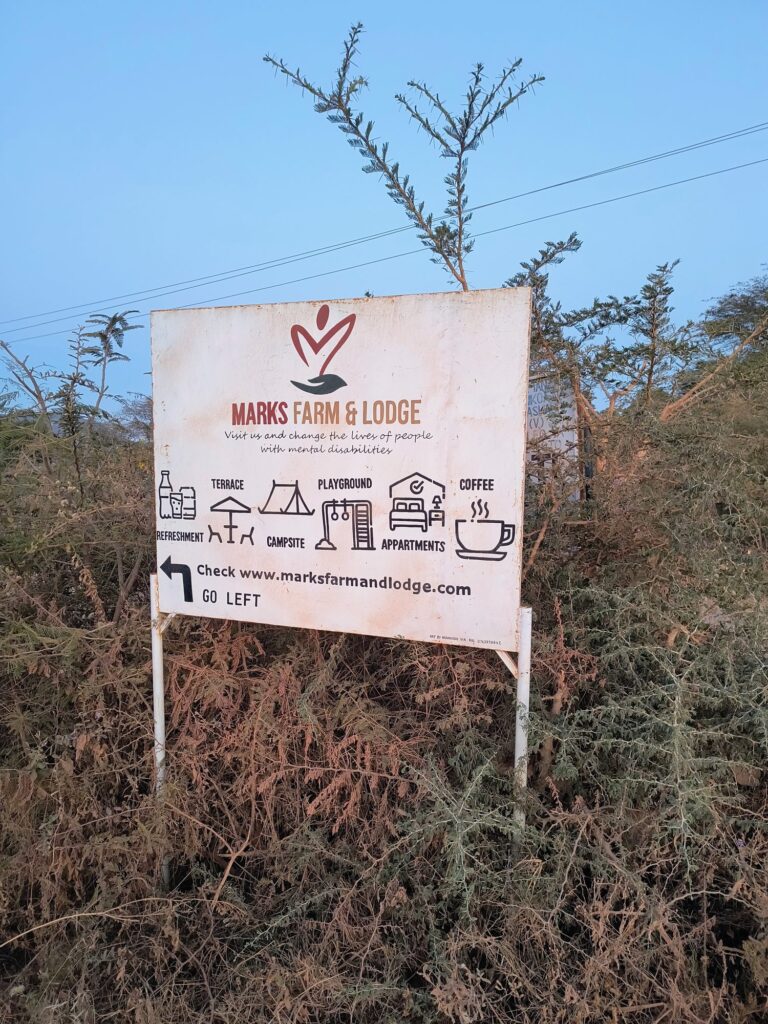
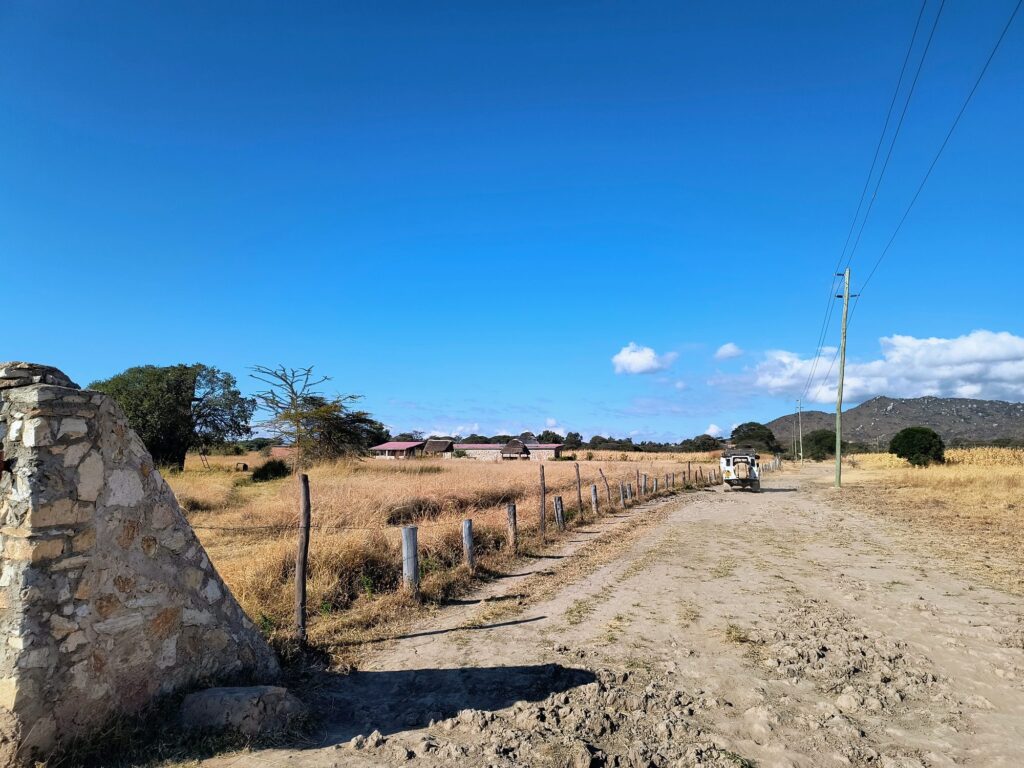
We are MARK’s Farm & Lodge, a 10-hectare farm and ecolodge in Mangalali village, 30 minutes from Iringa on the road towards Ruaha. Guests stop here for a simple reason: you wake up already on the right side of Iringa, with the park closer and the early start easier.
- Double room: TZS 75,000 per night
- Family room (a double bed and a bunk bed, four sleeping places, plus an optional baby cot): TZS 105,000 per night
- Campsite: TZS 30,000 per pitch per night, whatever the size of your group, including your own vehicle and your own ground tent or rooftop tent. Use of toilets and showers is included.
Facilities are shared and straightforward: separate toilets and cold showers for women and men, night security, wide open space, and a terrace where the sun goes down over the grassland. Meals are cooked with vegetables picked from our own garden that day, available at any time for a small extra charge, just let us know in advance.
GPS: -7.759022, 35.568609
WhatsApp: +255 747 657 344
Overlanders and self-drive travellers
Pitches are level and spacious, and overland trucks are welcome. Park your vehicle beside your tent. If you are travelling in a group or a larger vehicle, message us ahead on WhatsApp and we will sort it out.
While you are here
If you have a spare half-day before Ruaha, the Iringa region rewards it: Isimila Stone Age Site with its sandstone pillars, Gods Bridge, and the village life around Mangalali itself. We arrange activities together with the local community rather than around it.
And there is one more thing worth knowing about where you are sleeping. MARK’s Farm is a social enterprise: people with autism and intellectual disabilities work and learn here, in a country where that opportunity is rare. Your stay is what makes that possible.
Prefer a bed to a tent? Our farm stay lodge has simple double and family rooms next to the campsite, and if Ruaha is only part of your plan, our longstay option runs from one week to three months. After the park, we are the last calm stop before Iringa.